Projet Jeune Leader (PJL)
One in three adolescent girls in rural Madagascar is pregnant before age 18, and it’s the biggest reason they drop out of school. Without rigorous sex ed and trusted counselors, these norms will continue to threaten the health and well-being of young people, especially girls, living in rural areas.
The Idea
Scripted Sex Ed as Core Curriculum
Fellow
Maia Ramarosandratana
Mulago Lead
s


.JPG)
Total Investment
350000
Grants
0
Equity/SAFE
0
Debt/Convertible Debt
Funded Since
2024
Geography
Sector
Structure
The Mission
Healthy adolescents in rural Madagascar
How It Works
Projet Jeune Leader (PJL) embeds sex ed as a standalone subject in rural middle schools. The broad curriculum is designed around good decision-making, and it’s scripted so teachers deliver it in an effective and dynamic way. Teachers buttress learning through private counseling.
The Dream
All middle school students in rural Madagascar receive scripted sex ed, taught by trained teachers with PJL’s tools, and integrated into the national curriculum by the Ministry of Education.
Why We're In
PJL designed their solution with government in mind from the start. It's paying off: the Ministry is committed to implementing classes at 1,700 rural middle schools. That means 400,000 kids at a cost of just $1.52 per student. The curriculum keeps kids engaged in school while equipping them with critical knowledge about sexual health—we’re cautiously optimistic that this will reduce teenage pregnancies. Multiple rigorous studies are underway, and the team's commitment to evidence-based iteration in a challenging operating environment makes this a compelling bet.
Delivery
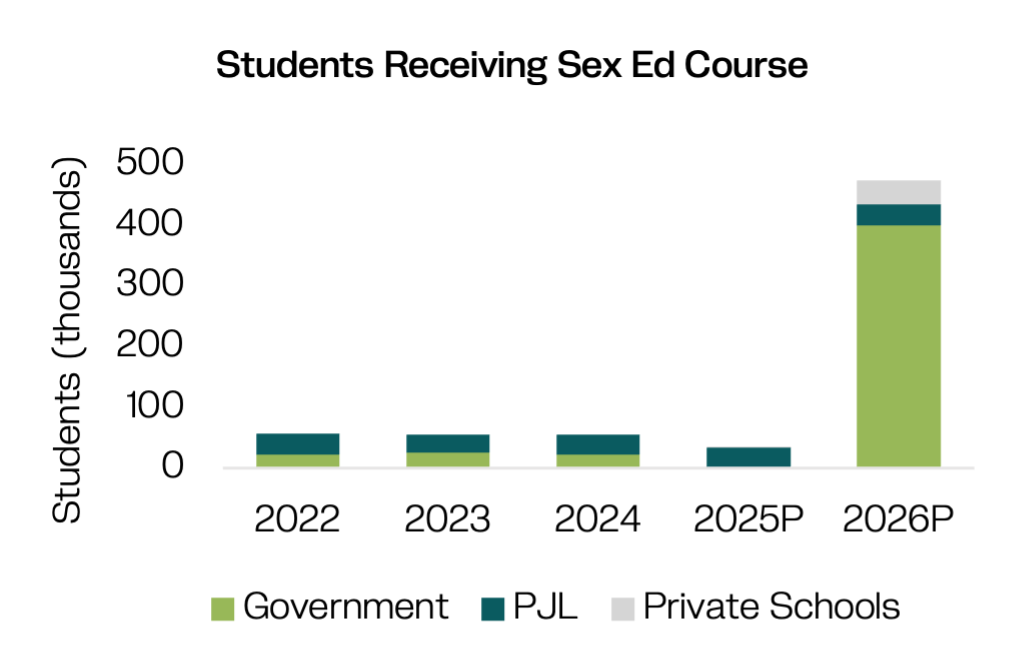
As of School Year 2026-2027, the PJL program will be delivered to more than 400,000 middle school students in public schools as well as a handful of pilot private schools.
The Model
A solution that works and can scale.
Community Buy-in
Engage school leadership and parents through community workshops to build buy-in and trust for the program.
Scripted Content
Customize Comprehensive Sexuality Education (CSE) content to local context and package into 108 scripted sessions so it is easier to deliver with fidelity.
Core Curriculum (embedded)
Embed the CSE sessions into school curriculum and deliver as a stand-alone, government-backed subject.
Teacher Training and Support
Train existing teachers to deliver sex ed and to counsel adolescents.
“On Demand” Counseling
Trained teachers are available for 1-1 sessions with adolescents looking for individualized support outside the classroom.
Potential for Impact at Scale
Mulago uses four criteria to gauge potential for exponential impact. The model must be:
This is about impact. There is a body of evidence that shows school-based sex ed shifts behaviors and norms, including delayed and safe sex. PJL’s own program data signals safer sex practices, reduced dropout rates, and improved attitudes towards sexual violence, but they need more rigorous evidence. They’re working to close the evidence gap: they have a cluster Randomized Control Trial (cRCT) underway focused on violence and sexual activity and are planning a very promising retrospective cross-sectional study to investigate pregnancy rates.
This is about scope. In rural Madagascar, 68% (860,000) of kids are in middle school, but they represent the potential future of the country. Reaching them with solutions that work is worth it. Currently the model is just working in public schools, but PJL is trying to reach more young adolescents. They’re piloting their model in 9 private schools—with an ambition to reach 35% of all private schools in the next 2 years. Madagascar is a tough proving ground—if it works here, it will likely scale more easily in other countries where conditions are less challenging.
This is about the ability of school systems to deliver the model. Government teachers are already delivering the scripted curriculum, and an external evaluation showed they do it with fidelity. But it’s 108 unique lessons over four years, which works because it slots into an empty civics class spot. Whether this is truly simple enough is something to watch in the private schools’ pilot.
This is about the cost of the program. PJL’s intervention is cheap. Very cheap. Start-up costs to government are $1.52 per student and they are targeting $0.50 per student per year. Most of costs are teacher salaries and are covered in existing budgets. With the government already implementing, signals are good that it’s cheap enough for the government to pay, but the national rollout is funded by the World Bank, so if the government could and would pay on their own remains to be seen.
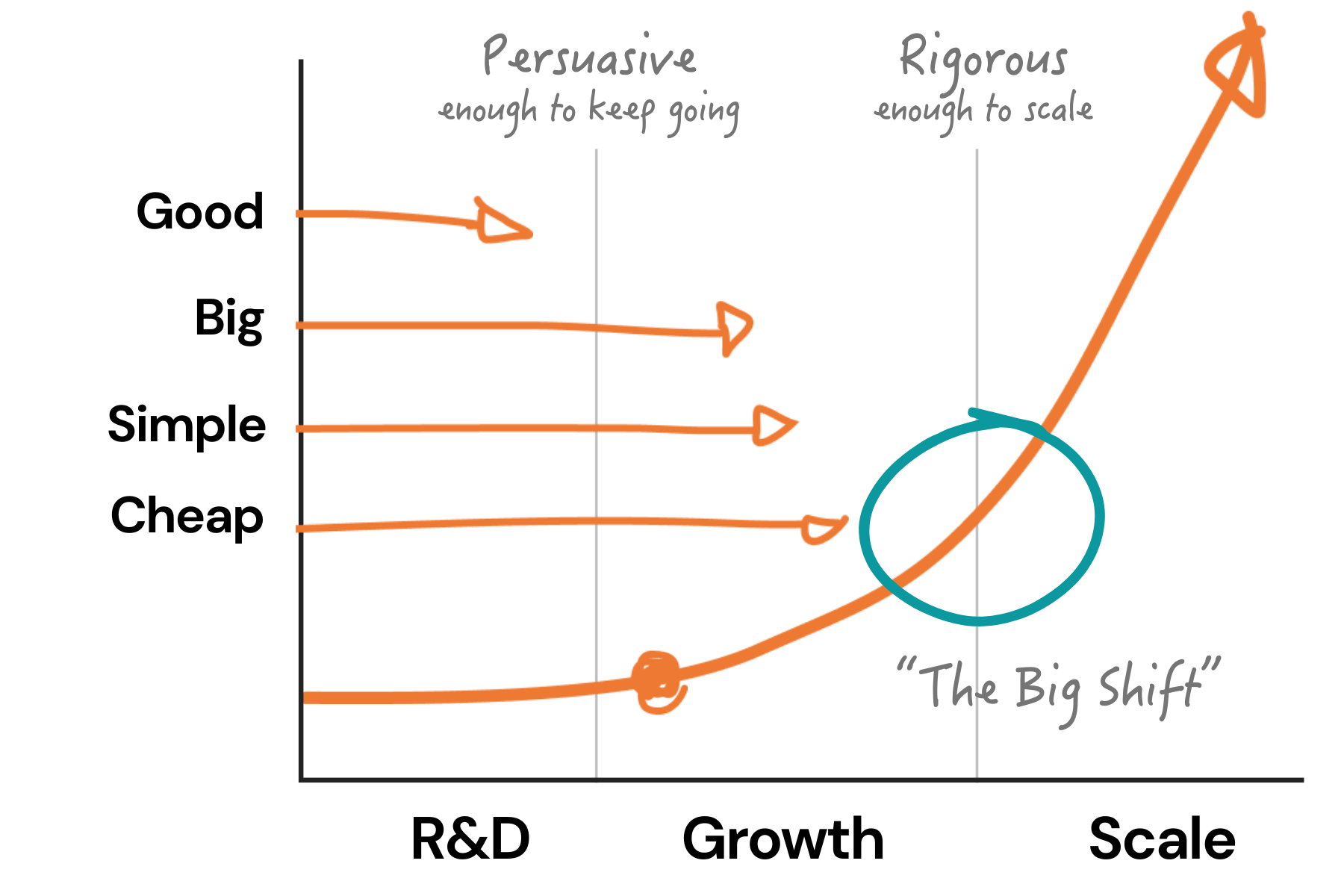
PJL is in early Growth stage, tuning the model and preparing for national scale, while still gathering evidence.
Our Take
PJL’s evidence of solution impact on health is lagging behind their very impressive progress towards scale. But they’re hustling to catch up, and their retrospective study is a really important opportunity to learn more. The cRCT will also provide more rigorous evidence that we’re eager to see, especially about how early kids become sexually active. This type of education is urgently needed and is already working in public schools. The pilot in private schools will signal if it can work there too. So far, the solution seems simple enough—the MoE is already implementing it—and though currently paid for by World Bank funding, it is very cheap. If a government as resource constrained as Madagascar can pay for this long-term, chances are good that it will be something that works in other countries too.
Are you a serious funder and want to learn more?
This is just a snapshot of what we know about the organization. If you're an investor or funder that might send some serious dough their way, we're always delighted to share more. Reach out and we'll connect you with the right person on our team.
*this is not monitored for funding requests.