Ujamaa Africa
An estimated 45% of African women experience some form of sexual violence in their lifetime. 50% of those cases occur before age 16.
The Idea
Self Defense Training for Girls
Total Investment
1350000
Grants
0
Equity/SAFE
0
Debt/Convertible Debt
Funded Since
2022
Geography
Sector
Structure
The Mission
Prevent sexual violence.
How It Works
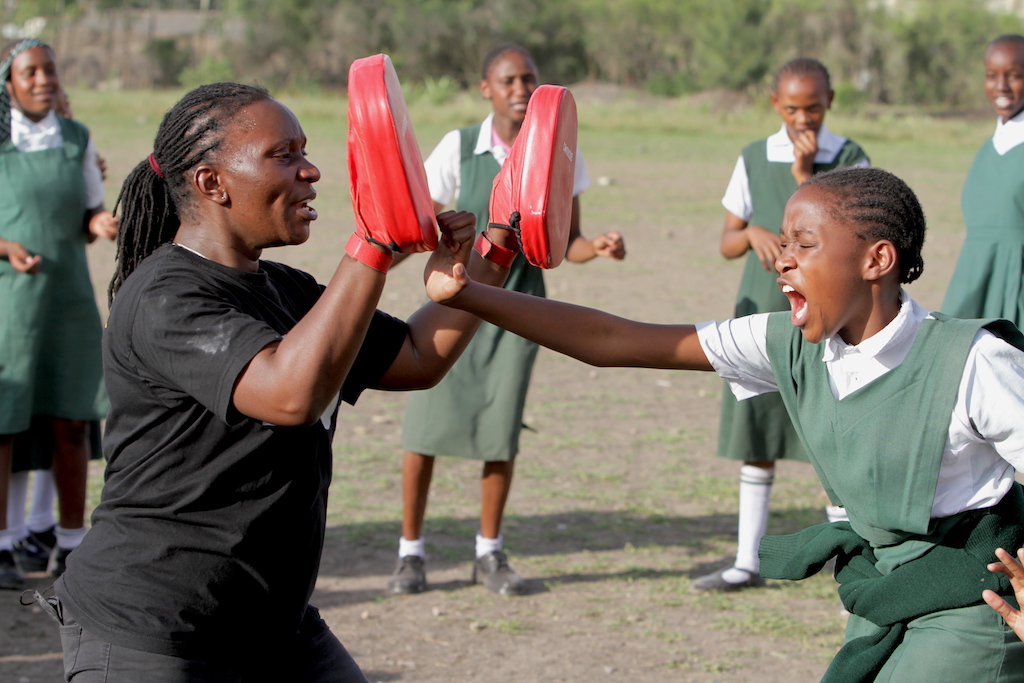
Ujamaa delivers a simple curriculum that teaches girls to recognize, avoid, and if needed, defend themselves from sexual predators. At the same time, they train boys on how to intervene on behalf of girls. The training is a set of highly interactive sessions delivered by trusted teachers. For those who disclose sexual violence, they provide referrals for legal, medical, and psychosocial support.
The Dream
Ujamaa's sexual violence prevention curriculum is embedded in national education systems—paid for by government and delivered by public school teachers.
Why We're In
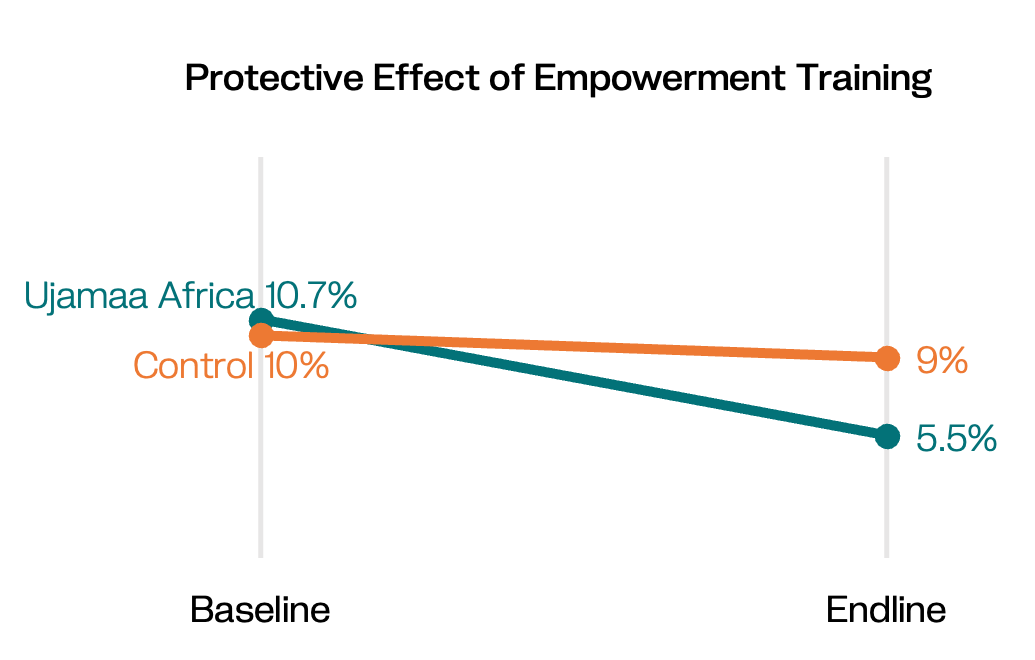
Multiple rigorous evaluations show a 40–50% drop in the occurrence of rape. Impact numbers of this magnitude are almost unheard of in sexual violence prevention programs. Ujamaa is scaling across Kenya in partnership with the Ministry of Education – they're in 21 counties and are on track to reach all public school students by 2028. They've now expanded to Malawi with full government support, and are proving that governments can do good job of delivering the program and achieve comparable impact outcomes.
Delivery

Ujamaa’s scaling up across counties in Kenya and Malawi with government teachers delivering the model.
The Model
A solution that works and can scale.
Curriculum
“Empowerment Transformation Training—ETT:” Girls are trained to watch out for predators and take specific measures to avoid them. They also learn a small but very effective set of self-defense techniques to use if cornered. Boys are taught to move beyond existing norms and to intervene when girls are threatened.
Instructors
Teachers volunteer to train kids. They are selected for aptitude and eagerness, and are trained and supported by master trainers within the Ministry.
Delivery
Teachers deliver 22 hours of well-designed, dynamic skills-based training—typically over seven sessions.
Referral
Teachers are provided with appropriate legal, medical, and psychosocial providers, and make effective referrals for girls disclose sexual violence.
Potential for Impact at Scale
Mulago uses four criteria to gauge potential for exponential impact. The model must be:
This is about impact and evidence. Multiple randomized control trials (RCTs) have shown a consistent 40-50% reduction in the incidence of rape. The most recent iteration, which included training for boys, demonstrated showed a 53% reduction in the occurrence of rape. Now that Ujamaa is scaling via government, they have an upcoming large-scale RCT with Yale that is measuring the effectiveness and durability of ETT when the Ministry of Education trains teachers and teachers deliver the training.
This is about scope. There is a big need across Africa. This works where there is a robust education system with conducive social norms, the capacity and resources to train teachers, and a reliable follow-on support ecosystem for students who experience sexual trauma and need professional help. ETT is already working in diverse settings – Kenya, which is richer and has a mix of rural and urban counties, and Malawi, which is poorer and more rural. The program did not work in Somalia given the political instability, but Ujamaa is pivoting to Somaliland, where they believe the right conditions exist.
This is about whether governments can deliver the model. Ujamaa is testing approaches to scale-up teacher training quickly, especially in rural areas. They are now deploying a “hopscotch” model: Senior trainers from Ujamaa and the Ministry train master teachers from half the schools in a cluster. These master teachers then train teachers in the remaining schools. An internal study by Ujamaa shows that when government teachers deliver the program in government schools, they achieved a similar 50% decrease in the occurrence of rape. In four Kenyan counties, Ujamaa is in process to exit entirely and handover complete ownership of the model to local government.
This is about what the model costs if delivered by government and whether government is willing and able to pay. As of 2025, Ujamaa estimates it costs $1.62/student trained (Kenya) and $2.63/student trained (Malawi). They estimate that once the government is fully delivering the model, their costs will decrease to ~$0.10/student trained per year. At that point, Ujamaa’s role will be predominantly focused on assisting the Ministry of Education with monitoring/evaluation and quality assurance as opposed to any direct delivery.
.png)
Ujamaa are on the cusp of scale. They have a body of evidence that is rigorous and compelling.
Our Take
The big outstanding question is whether government can also consistently deliver the same results at big scale, something their upcoming Yale study should clarify. Government teachers are doing a good job in Kenya and Malawi and even though things didn’t work out in Somalia, they learned some valuable lessons about where to go—and where not to. Per Ujamaa’s calculations, the cost is affordable even by strapped education systems, mainly because the program makes use of existing teachers to deliver the curriculum. Given their stage—early scaling—they are very much on track.
Are you a serious funder and want to learn more?
This is just a snapshot of what we know about the organization. If you're an investor or funder that might send some serious dough their way, we're always delighted to share more. Reach out and we'll connect you with the right person on our team.
*this is not monitored for funding requests.
.JPG)

.jpeg)